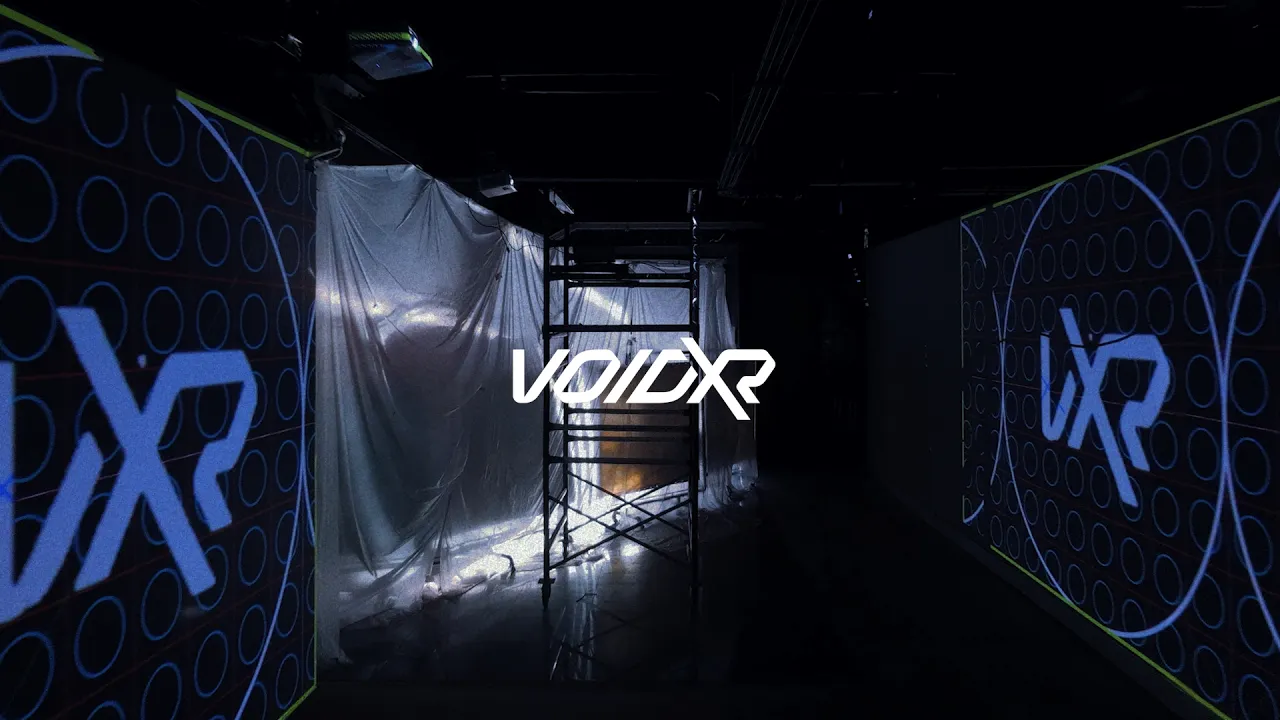
SCIENCE ON THE COURT
Permanent Video Mapping Installation · Universum Museum · UNAM · Mexico City
"Universum, Museo de las Ciencias" did not need another temporary exhibit dismantled when the theme changed. It needed its temporary exhibition hall equipped with a permanent video mapping system—one capable of serving different themes without rebuilding the installation from scratch.
The inaugural theme focused on the science of sports, marking the year Mexico co-hosts the 2026 World Cup. The next theme will arrive with the next partner. The installation is already in place.

The Challenge
Germán Albizuri, project lead at Universum, was tasked with transforming the entry tunnel of the temporary exhibition hall. The objective was not to build an installation for a single topic and dismantle it for the next, but to construct a permanent video mapping system that the museum could operate continuously, featuring content that changes according to its institutional partnerships.
Regarding this directive, M.A. María Emilia Beyer Ruiz, Director of Universum, had established the institutional mission: "Closing the technological gap in access to science, using wonder as the entry point." The entrance tunnel to the gallery, as the visitor's first contact with the exhibition, was the precise place to deliver on that mission.
The technical challenge this posed was concrete. A permanent installation in a museum in daily operation is not designed like a one-off event. It must operate with minimal staff intervention, allow for content changes without dismantling the hardware, and remain stable over years of operation, not weeks.
Decisions That Build Longevity
The work behind a permanent installation differs fundamentally from temporary event production. Three key decisions demonstrate this.
First is the wall color selection. Before producing a single scene of content, we conducted on-site colorimetric tests using actual paint samples under real projection conditions. We evaluated four distinct tones against the entire required color palette: RGB, contrast, whites, blacks, blues, greens, magentas, and specific content stills. The objective was not to find a color that worked for this specific theme, but the one that would respond best to any future palette. The result was 'Elemental Gray,' a tone that delivers the optimal balance of light absorption and reflection for any content type. This eliminates a risk variable with every theme change.
Second is the mounting system design. Projector mounts for a permanent installation are not the same as those used for temporary events. We engineered a custom structure specifically for this tunnel: arm, plate, and spider for each of the five projectors, with a vertical support anchored directly to the concrete slab to guarantee long-term alignment. The stability of the projection geometry does not depend on human intervention; it is physically locked in place.
Third is the control interface. Five projectors in a museum gallery cannot rely on an operator walking the space with a remote control trying to target each device. The system is calendar-driven: programmed to align with museum hours, it powers on, runs the show, and powers down automatically. Staff do not turn equipment on or off directly. Their daily role is simply to verify that everything is running smoothly, using a single screen that displays the real-time status of all five projectors. If an issue arises, the operator detects it and acts without needing specialized technical expertise or support calls. The comprehensive operations and troubleshooting manual delivered at project close documents every scenario.


What Visitors Experience
Upon entering the temporary exhibition hall at Universum, the first space visitors traverse is the tunnel. The walls project the scientific world behind sport: the Magnus effect curving a ball's trajectory, muscle fibers under the stress of a sprint, the mechanics of a motion-tracking vest, the molecular architecture of the fullerene C60.
The tunnel is not the exhibition itself. It is the gateway: the moment that situates the visitor, turning the transition from one space to another into the start of an experience. Science transformed into imagery, set in the science museum of Mexico's largest university, in the year the country welcomes the world for the 2026 World Cup.
The content was developed by Poltak, an animation studio with a strong track record in Mexico and abroad. This process was coordinated with the Universum and voidXR teams to ensure alignment with the museum's institutional mission and UNAM's scientific communication standards.
The Process
Three months of work, from February 18 to May 15, 2026.
Coordination was handled directly with the Universum team from the very first meeting. The museum managed the civil works; voidXR delivered the technical specification documents that guided it. Colorimetry tests, mounting design, and control system configuration occurred in parallel with the space adaptation, not after it.
On May 7, the Director saw the system operating for the first time in the completed tunnel. The opening took place in May 2026. Upon handover, the Universum team received operational training, the system manual, and the warranty policy.
The relationship with voidXR did not end with delivery. Active maintenance has continued since the opening, and work is currently underway on a proposal for the next evolution of the space: the integration of motion and proximity sensors that will make the content respond in real time to the visitor's presence.


The Result
Universum now has a permanent video mapping system in the entrance tunnel to its temporary exhibition hall. The space is no longer presented to institutional partners as an empty room; it is offered with the installation fully set up, calibrated, and operational.
The system runs autonomously on a scheduled calendar. Content for upcoming themes is updated without dismantling hardware, repainting walls, or rebuilding from scratch. The creative piece changes; the infrastructure supporting it remains.
The first theme is now running. The second is to be determined.


